
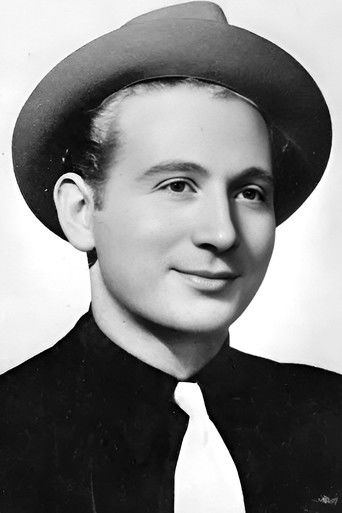
Charles Trenet
View on IMDb ↗Louis Charles Augustin Georges Trenet (18 May 1913 – 19 February 2001) was a renowned French singer-songwriter who composed both the music and the lyrics for nearly 1,000 songs over a career that lasted more than 60 years. These songs include "Boum!" (1938), "La Mer" (1946) and "Nationale 7" (1955). Trenet is also noted for his work with musicians Michel Emer and Léo Chauliac, with whom he recorded "Y'a d'la joie" (1938) for the first and "La Romance de Paris" (1941) and "Douce France" (1947) for the latter. He was awarded an Honorary Molière Award in 2000. Trenet was born in Avenue Charles Trenet, Narbonne, Occitanie, France, the son of Françoise Louise Constance (Caussat) and Lucien Etienne Paul Trenet. When he was age seven, his parents divorced, and he was sent to boarding school in Béziers, but he returned home just a few months later, suffering from typhoid fever. It was during his convalescence at home that he developed his artistic talents, such as performing music, painting and sculpting. His mother remarried, and he lived with her and his stepfather, writer Benno Vigny. In 1922, Trenet moved to Perpignan, this time as a day pupil. André Fons-Godail, the "Catalan Renoir" and a friend of the family, took him for excursions with painting. His poetry is said to have the painter's eye for detail and colour.[3] Many of his songs refer to his surroundings such as places near Narbonne, the Pyrenees and the Mediterranean coast. He passed his baccalauréat with high marks in 1927. After leaving school, he left for Berlin, where he studied art, and later, he also briefly studied at art schools in France. When Trenet first arrived in Paris in the 1930s, he worked in a movie studio as a props handler and assistant, and later joined the artists in the Montparnasse neighbourhood. His admiration of the surrealist poet and Catholic mystic Max Jacob (1876–1944) and his love of jazz were two factors that influenced Trenet's songs. From 1933 to 1936, he worked with the Swiss pianist Johnny Hess as a duo known as Charles and Johnny. They performed at various Parisian venues, such as Le Fiacre, La Villa d'Este, the Européen and the Alhambra. They recorded 18 discs for Pathé, the most successful of which was "Quand les beaux jours seront là/Sur le Yang-Tsé-Kiang". The Charles and Johnny records feature Hess on piano, with the two frequently singing in two-part harmonies with quickly alternating solo spots for the two. Around 1935, the duo appeared regularly on the radio on a broadcast titled Quart d'heure des enfants terribles. The duo continued until 1936 when Trenet was called up for national service. After performing this, he received the nickname that he would retain all his life: "Le Fou chantant" (The Singing Madman). He began his solo career in 1937, recording for Columbia, his first disc being "Je chante/Fleur bleue". The exuberant "Je chante" gave rise to the notion of Trenet as a "singing vagabond", a theme that appeared in a number of his early songs and films. He shot to stardom very quickly; as Jean Cocteau put it, when Trenet sang, "He was so young, so fresh that the bar yielded to a rustic decor, the projectors became the stiff branches of a cherry tree, the microphone a hollyhock, the piano a cow." ... Source: Article "Charles Trenet" from Wikipedia in English, licensed under CC-BY-SA.
Known for
 Midi Première
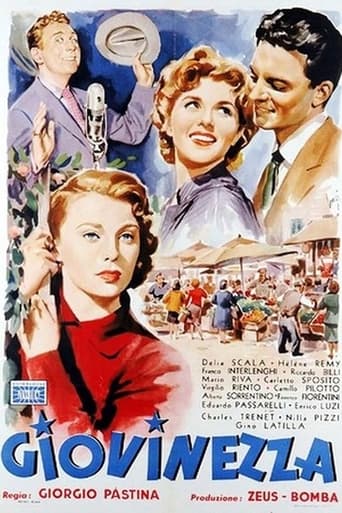 Giovinezza
 Guet-apens, des crimes invisibles
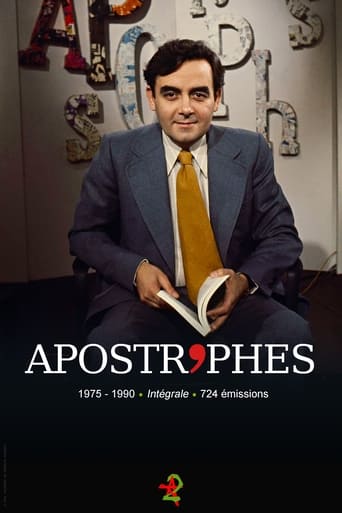 Apostrophes
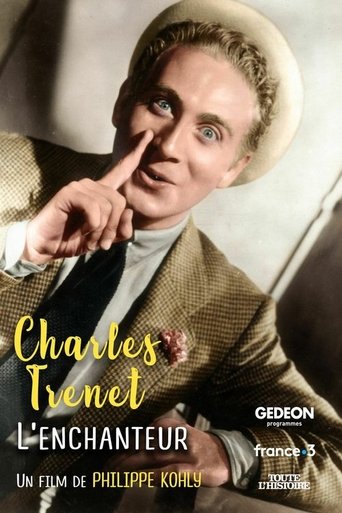 Charles Trenet, l'enchanteur
 Le Grand Échiquier
 Dim Dam Dom
 Numéro un
 La TV des 70's : Quand Giscard était président
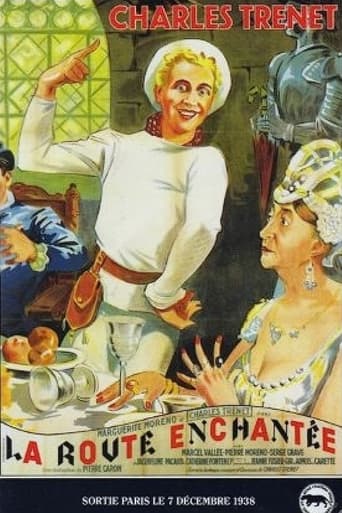 The Enchanted Road
Filmography (33)
- 2023
 Guet-apens, des crimes invisiblesSelf (archive footage)
 - 2022
 Charles Trenet, l'enchanteurSelf (archive footage)
 - 2022
 La TV des 70's : Quand Giscard était présidentSelf (archive footage)
 - 2022
 Il était une fois Champs-ÉlyséesSelf (archive footage)
 - 1987
 Sacrée soiréeSelf
 - 1987
 Le monde est à vousSelf (archive footage)
 - 1985
 Victoires de la musiqueSelf
 - 1984
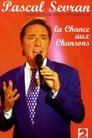 La Chance aux chansonsSelf (archive footage)
 - 1982
 Champs-ElyséesSelf
 - 1975
 Midi PremièreSelf
 - 1975
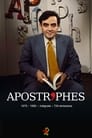 ApostrophesSelf
 - 1975
 Numéro unSelf
 - 1975
 Les Rendez-vous du dimancheSelf
 - 1975Système 2Self
- 1972
 Le Grand ÉchiquierSelf
 - 1972
 Midi trenteSelf
 - 1971Samedi soirSelf
- 1971La Lucarne magiqueThe mysterious man
- 1971
 Cadet RousselleSelf
 - 1965
 Dim Dam DomSelf
 - 1965
 L'Or du duc
 - 1957
 It Happened on the 36 CandlesSelf (uncredited)
 - 1957
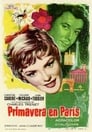 Springtime in ParisCharles Trenet
 - 1956Melodie der WeltSelf
- 1954
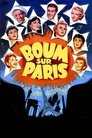 Boom on Parislui-même
 - 1952
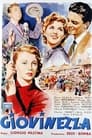 GiovinezzaCantante
 - 1951
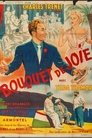 Bouquet de joieCharles Trenet
 - 1943
 Love Around the ClockCharles
 - 1943
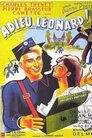 Adieu LéonardLudovic
 - 1942
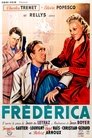 FrédéricaGilbert Legrant
 - 1941
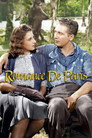 Paris RomanceGeorges Gauthier
 - 1938
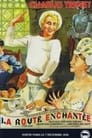 The Enchanted RoadJacques Minervois
 - 1938
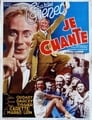 I SingCharles